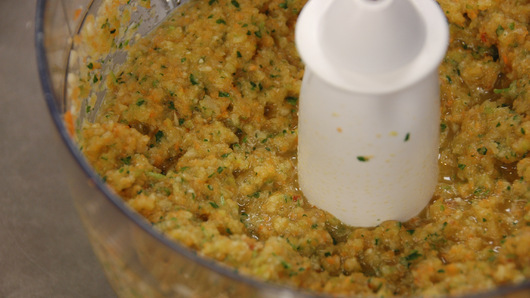
To make a salt-free version, you will need to freeze the paste; otherwise, the vegetables will go rancid. To do this, freeze the paste into smaller portioned-size servings. Be warned though, the paste does not keep as well without the salt. The vegetables tend to get a bit of freezer burn and form some fairly big ice crystals.
I also tried making several versions using less salt but the more salt I omitted, the more the bouillon seemed to suffer. I think I will stick with the saltier version and just omit the seasoning in whatever dish I am cooking. Once you get the hang of the saltiness, it makes cooking a dish just a bit faster as you don't have to worry about seasoning very much, if at all.
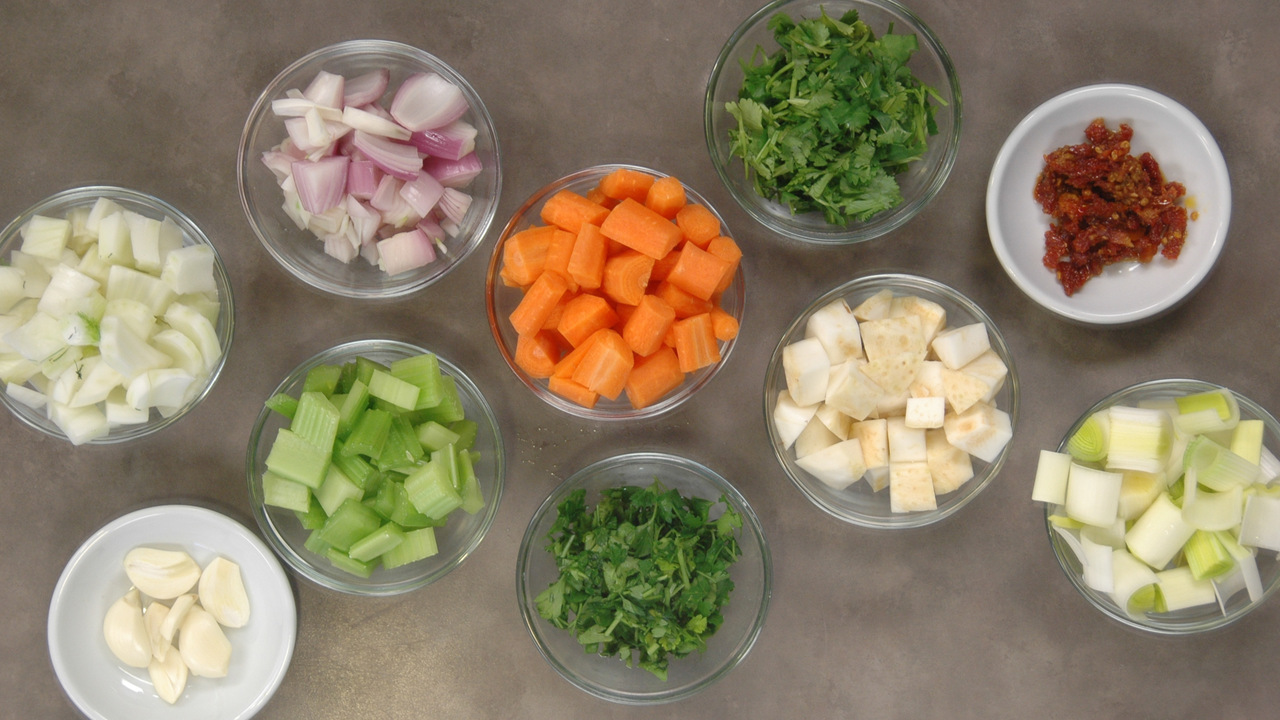
The flavors in this particular vegetable paste are nicely balanced and very refreshing. However, you can add more or less of anything you like. You may even want to omit certain vegetables. You could also try adding things like mushrooms to give the stock a more earthy tone. That is the great thing about this paste; you can play around to see what works for you. Just make sure the vegetables are very fresh. Keep in mind that what you add to the paste will ultimately give the bouillon its character or flavor profile. For example, green peppers, garlic, cilantro, onions, chilies, and certain spices would give the bouillon an Latin American essence.
This recipe was inspired by Pam Corbin from her
River Cottage Preserves Handbook. And also by
101 Cookbooks.